
As I prepare to head east for my annual week at the beach I have been reading with interest and concern about the recent trend of street takeovers that have been occurring across the country. It happened in early June on the east side here in Columbus. It caused the closing of the St. Catharine festival. It also happened just to the north and south of where my family and friends go on vacation at the beach resorts of Rehobeth, Delaware and Ocean City, Maryland.
Hundreds of teenagers, with the aid of social media, descend on a specific location at a pre-arranged time. Reports say that at times, the gathering simply impedes street traffic and interferes with patrons being able to go to businesses in the impacted area. On the east side in Columbus there were scattered fights as well as a shooting. One incident that I read about involved the looting of a 7-11 convenience store.
I don’t want to debate the why of this new phenomenon. Restlessness, boredom, hot summer nights and feelings on the part of young people of a lack of empowerment surely plays into it. But how do these begin? Is it organic? Is it as simple as one teenager on his or her cell phone saying, “Hey, let’s close down this intersection at 11 tonight?” Not being a part of the group chat scene on Instagram or snapchat I have been slow in realizing how frequently our children are engaged in continuous conversations on social media. Many, to be sure, are innocent exchanges, but even among students at Our Lady of Peace I have seen evidence that many of these conversations have become toxic and certainly most unchristian.
To be sure there have been both gatherings of teenagers for generations as well as crude, mean talk since mankind began to have language skills, but for our young people social media has made this conduct increase. Now it happens at almost all hours of the night and can involve larger groups of people. In addition, the conversations, innocent and not so innocent, are recorded electronically, seemingly forever.
Tik Tok trends become universal in days. Social media influencers, from creepy adults to pre-teens are being paid money by advertisers when they see that someone’s “audience” becomes large enough. This can be used to spread simple information and sometimes joy and hope. More and more, however, it is used to spread misinformation and vileness, appealing to the worst nature of ourselves. All ages are susceptible to this, but young people are unduly influenced by forces that many times we adults are totally unaware.
It is truly remarkable that Jesus started His Church with just a dozen followers in one tiny corner of the globe over the short period of three years. Imagine if the apostles had access to group chats and email. The point is, of course that the spread of the Gospel message is so imbued with the wonder and majesty of God that it was able to spread everywhere. God didn’t need the internet.
How do we counteract the evils of social media? The proverbial toothpaste is already out of the tube. I don’t see it crawling back. But as Christians we can oppose the dark by living our lives every day exuding the hope and promise of Christ and making sure that our children know that each of them is here to serve a unique purpose towards the building of His Kingdom. Aimless, negative, and excessive time in meaningless, destructive conversations or gatherings that degrade human dignity do nothing to advance us or our desire to bring the world to the peace of Christ.
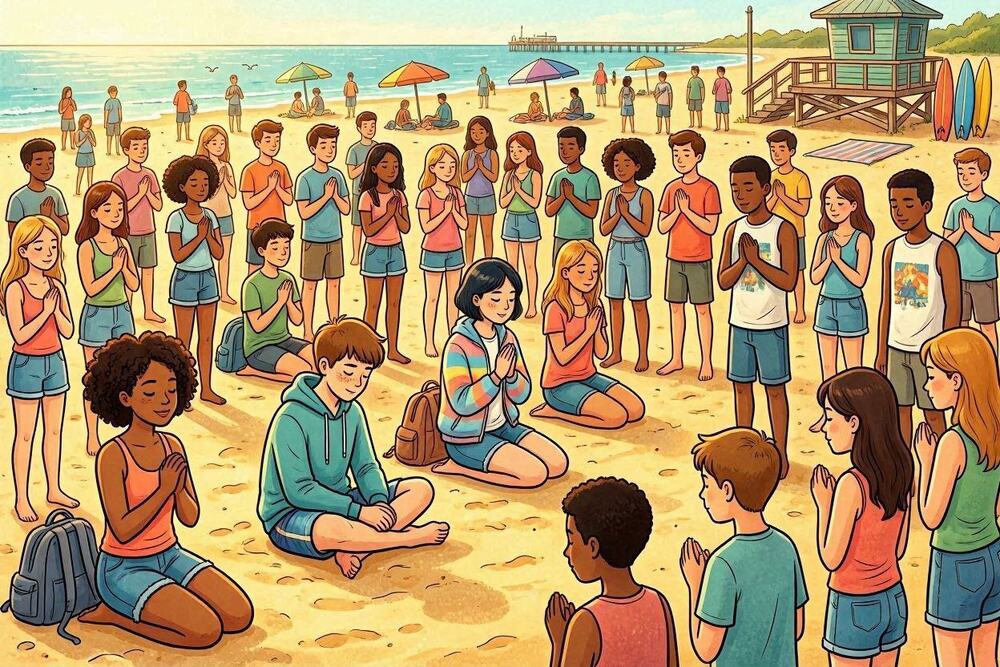
Wouldn’t it be nice if in the next teenage takeover, young people gathered to pray? Wouldn’t it be terrific if in the next group chat each participant acknowledged one another as children of God?